APPLICATIONS / OPERATIONAL FIT
Different operations.
Different questions.
A battery in a workshop, a storage yard and a vessel presents a different planning conversation. Start with your setting.
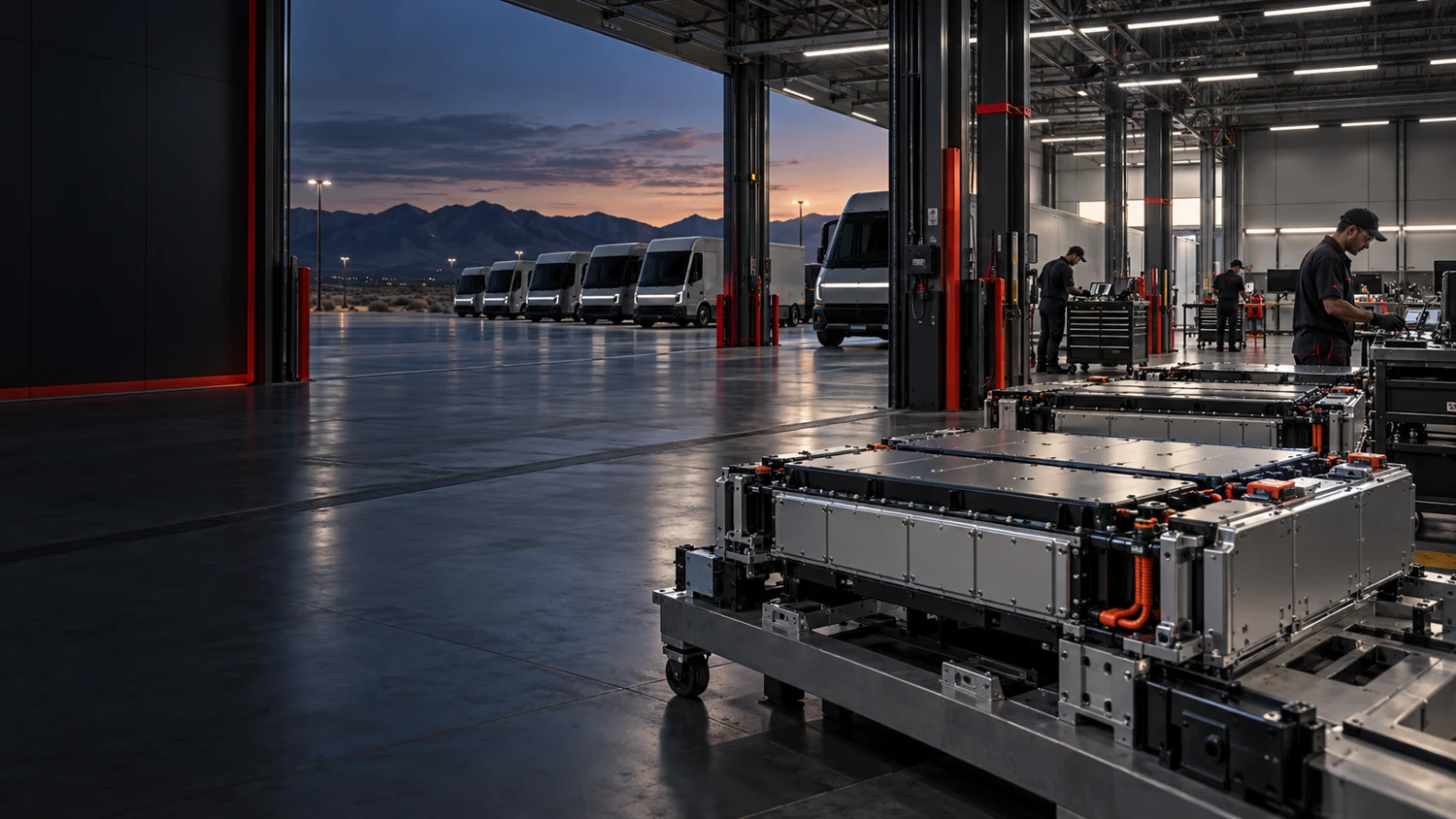
Built around your operation
01Fire & rescue
Evaluate agents in the context of trained response procedures, incident types and the delivery equipment already in service.
Bring these details to the discussion
- Battery or vehicle types encountered
- Available application equipment and water source
- Training, test evaluation and procurement requirements
Explore the relevant solution →EV service & recovery
Service facilities and recovery operators need to coordinate the transition from incident response to vehicle or battery handling.
Bring these details to the discussion
- Vehicle manufacturer emergency information
- Battery condition and access limitations
- Receiving facility and recovery responsibilities
Explore the relevant solution →Battery storage & logistics
Receiving, storage, returns and recycling introduce different battery conditions and handoff points. A written assessment helps define the product inquiry.
Bring these details to the discussion
- Battery chemistries and approximate inventory
- Damaged-battery segregation and response arrangements
- Packaging, carrier and receiving-party requirements
Explore the relevant solution →Vessels & marine operations
Review product fit alongside the vessel’s battery installation, access and approved operational procedures.
Bring these details to the discussion
- Battery compartment and access arrangement
- Water source and proposed application equipment
- Vessel or facility technical approval process
Explore the relevant solution → Transport has its own requirements
PHMSA treats lithium batteries as hazardous materials in transport. Damaged or defective batteries require a separate shipping assessment. A suppressant or gel does not replace packaging, marking, training, carrier acceptance or other applicable requirements.
Source: PHMSA · Transporting Lithium Batteries ↗
